
QuicksearchCategoriesGet jonbryan.com via email!Show tagged entries |
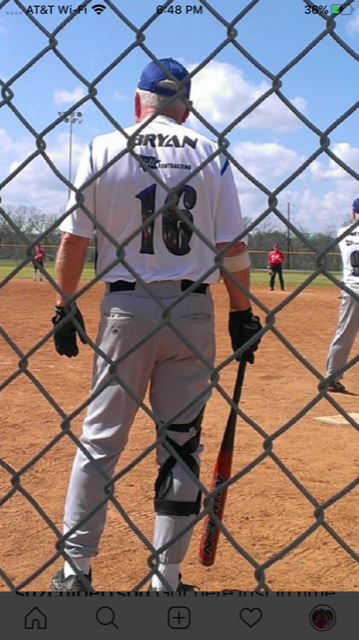
Thursday, July 2. 2009Morning Walks, June 27, 2009June 30th through July 3rd, Layla and I will be gone to Liberty, Kansas to where I’ll be playing in the SPA Midwestern Championship, Senior Softball Tournament. The Texans, after winning State in Dallas two weeks ago, should do well in this one. The walk didn’t get exciting until I got home. I still hadn’t taken my ball cap off and I went to the side of our house to move a sprinkler, and on the way, bumped into a hanging plant. With my ball cap pulled down and looking at the sprinkler, I never saw the plant and never saw what was resting among the leaves. After moving the sprinkler, I walked to the back door and felt something crawling on my neck. I reached up and swatted, what I thought was a june bug, but turned out to be a tarantula. After the swat, it landed on the porch and I had Layla get me a sack real fast and using a broom, coaxed it into the sack. Sack and tarantula were carried out to the cow lot and I shook the big spider out on the ground. Their bite, more like a bee sting, is only dangerous to a human if you’re allergic to the venom, but seeing the big, hairy spider, that was on the back of my neck, certainly made my heart beat at an aerobic level!
Posted by Jon Bryan
in Hill Country Happenings
at
08:05
| Comments (0)
| Trackbacks (0)
Defined tags for this entry: deer, hill country happenings, horses, jackrabbit.tarantula, jonbryan, walking
Tuesday, June 30. 2009Rigging Up For JiggingSelection of the cane pole is the main element in the manufacture of a proper jigging pole. It must be a minimum of sixteen feet long, with plenty of whip or bend, with a slight downward curve at the tip. Wrapping the pole with sixty pound, test, braided fishing line is next. The wrap should begin about three feet from the butt end of the pole and include a wrap every six inches. To hold the wrap in place, every eighteen to twenty-four inches tie a half-hitch knot in the line around the pole and continue the wrapping. The last two feet of the pole, the wraps should be not more than two inches apart, with a secure knot tied on the tip, but leave the tag end of the line hanging down below the tip. Eight inches below the tip attach the first hook. The hooks can be one of several sizes, but, to prevent straightening, must be steel, long shank type. When the first hook is attached, clip the line below the hook, then slip another hook of the same size over the point of the first hook, slide it to the hook’s curve and then crimp it on. Just before fishing, attach two pork rinds, spotted green works best. Attach the first rind to both hooks then attach the second rind to the bottom hook only. For best results, press the rod butt along the bottom of your forearm, grasp the pole securely and gently tap, tap tap, the rod tip on the surface and you’ll notice that the tip makes dimpled, circles in the water. That’s the right way. The bait jumps and slides below the surface and the fish will explode into the bait. There is no hook setting, just holding on to the pole. Then hand over hand on the pole until the fish can be reached then net or jerk it into the boat. This is a two, person job, one jigging the other driving and a skiff is the ideal boat. Propulsion of the skiff can be provided by paddle or electric motor. Just be sure the propeller doesn’t bang into too many limbs or stumps. When Buck and I jigged it was usually around the edges of a pond or lake in water from one foot to four. Don’t hesitate to fish over an area two or three times, because Buck believed that a bass would finally hit the bait out of frustration! Once, on a bet, he and I fished around the stumps on Lake Sam Rayburn’s south side in up to twenty feet of water and hammered the bass. He won the bet! Now, the hardest part of all may be finding the right Calcutta, cane pole, or even finding one! Sunday, June 28. 2009Even AlligatorsSlowly tapping the sixteen foot, Calcutta, cane pole tip on the surface, the bait, two pork rinds, attached to two hooks, seemed to slide and jump, just under water, beside the dead tree. An explosion on the surface, bigger than a “blow up”, and the big strike bent the long pole over half way down into the water. The pole sizzled through the water as the fish ran in a wide circle around the aluminum skiff. Unceremoniously, hand over hand, I brought the big, bass to the surface, jerked it into the skiff, smiled and held it up for Buck to see. He said, returning my smile, “Boy, you handled the jigger pole just right!” The bass was over six pounds and a personal best for my attempts at jigging. An eight, pound, bass was the best that I ever witnessed him catching. Buck said that his most exciting jigging event was in South Carolina when he caught an alligator, and in his words, “I quickly let go of the pole and let the ‘gator worry about it.” He had learned this unique, fishing technique, jigging, and the manufacture of the equipment from, of all things, an old Indian (native American type). This same old Indian made a poultice to cure Buck’s numerous sore throats, Buck drank the potion and passed out from the taste and the “fire” in the mix, but after he awoke, he never had a sore throat again. It probably just ate out his tonsils! Before WW II, Buck, my former father-in-law, lived in South Carolina, across the Cooper River from Charleston. Buck was a wild thing then, a Klansman, a former professional boxer, a tailor and a hunting and fishing guide. He once guided Nash Buckingham, maybe the best bob white, quail shot ever, on a duck and goose hunt on Currituck Sound, in North Carolina. Buck perfected his jigging techniques in the numerous ponds and irrigation ditches in the South Carolina lowlands. He was an expert with a cane pole, jigging for fish, primarily for bass, but anything in fresh water, even alligators, will hit a jigged lure. The secret that he passed on to me, was in the manufacture and preparation of the cane pole, hooks and pork rind baits. “Rigging Up For Jigging” will be posted on June 30. Friday, June 26. 2009More Outdoors Pictures, June 26, 2009
My friends keep sending me some real neat outdoor pictures so I’ll just keep posting them.
Randy Pfaff sent me this very, very unusual picture of a mountain lion and big horn sheep. The lion had caught up with the sheep and taken a plug out of the sheep’s backside. There was another picture of the lion’s mouth with the sheep meat and fur still intact, but it was past good taste to show it. The sheep was trying its best to escape but both crossed the road when a vehicle smacked both, ending the chase!
Posted by Jon Bryan
in Pictures
at
08:05
| Comments (0)
| Trackbacks (0)
Defined tags for this entry: bass, big horn sheep, bobcat, jackcrevalle, jonbryan, mountainlion, pictures
Wednesday, June 24. 2009Morning Walk, June 23, 2009The past two and a half weeks, each morning I have been packing my camera and no worthy “shots” appeared; no snakes, deer, rabbits, or even livestock. Each evening, out in our field, but too far for a picture, we can barely make out some newly born deer struggling through the Sudan grass. These are the fawns from the first estrus cycle. Obviously the does are “fawning” right now. Tuesday morning I did get two good “shots”. Some times the natural order takes precedence over getting some good “shots”! Monday, June 22. 2009'Gator BaitWorld War II ended in August 1945 and by the summer of 1946, military surplus stores were booming. Eliminating the middleman, one of my industrious Uncles, Austin Bryan, a Navy Sea Bee, had appropriated a two man, inflatable life raft that had been “lost” off of a Catalina flying boat. It had never been used so Uncle Austin made a plywood box for it and shipped it back to the ‘States, to his Brother, my Dad. We now had a “fishing boat” and me, being young, thought pumping it up was neat. Our first trip was with our neighbor, Dave Miller, a WW II veteran and former student at Texas A & M College (now University) and his son Bill, to an oxbow lake off of the Brazos River, south of Richmond, Texas. This was a very “private” lake on a large State Prison Farm. This trip being arranged by another Uncle, A.C. turner, who, at the time, was the Rehabilitation Director for the prison sysytem. We drove to the lake, inflated the boat and then “took turns” fishing out of the life raft. Bill and I went first and learned quickly the art of paddling a life raft. Our first attempt resulted in an inglorious circle! Our fishing results were better, several small bass, that were put on our communal stringer and then we headed to the shore and turned the raft over to our Dads. Left on the bank while our Dads were working on the bass, Bill and I caught some grasshoppers and went to bait fishing. Not much wind, a real nice afternoon and we noticed a snag drifting near our spot. It drifted up and stopped and quit drifting. Being nine and eleven years old we thought nothing of it and kept fishing. Our Dads were headed back our way with a couple of more fish on the communal stringer and Dave yelled to us, “What’s that in the water out from you?” Being young we answered, “Where?” My Dad said, “Boys, watch where I cast,” as he cast a wooden, Lucky 13 plug, toward us and across our “snag”. He twitched his rod tip and reeled one turn at a time, “walking the dog” back over the “snag” and then the water exploded and a big, it seemed five or six feet long, alligator, our “snag”, cleared the water in a twisting, mouth open, teeth showing jump, made a great splash as it returned and then took off, at top speed, pulling the life raft behind it! My Dad’s Calcutta rod was dangerously bent! He was yelling because the ‘gator was stripping line from his reel, and the reel’s only drag system was his thumb! Trying to stop the ‘gator’s run, his thumb was being blistered because he was using it to put pressure on the reel spool. The ‘gator jumped again, the plug pulled loose and came sailing back toward my Dad and, a ducking Dave and settled on the water behind them. “Whoopee” exclaimed Dave, followed by a “Damn” from my Dad, as both anglers paddled back toward us. Laughingly, my Dad told us ” ‘Gators like to eat little boys if they can catch one and this one was sizing both of you all up for a dinner.” Silently we deflated the raft, packed it in its plywood box and did not enjoy his attempt at humor! In a picture box display, in the main hall of my ranch house, are all of my Dad’s old fishing plugs, including the tooth scarred, wooden, Lucky 13 that he “walked” over the ‘gator. Saturday, June 20. 2009Don’t Drink The WaterMy Great Uncle, Lee Wallace, a lawyer, writer and judge, was quite a “sport” and well known throughout our State. He was my Mother’s favorite Uncle and some of his exploits are near legendary. Around the turn of the 20th century, Lee, County Attorney for Kerr County, Texas and another lawyer, decided they would go and visit one of Lee’s friends in Pecos, Texas, probably a hundred and fifty to two hundred mile trip. Remember, no interstates and very few cars then and their chosen mode of transportation was a team of horses, pulling their wagon. A car trip from Kerrville to Langtry, even with our modern highways, is not easy today and in the early 1900’s, had to be a nightmare. To bolster their courage, along with their pistols, they took two cases of whiskey, one for their trip and one for Lee’s friend. Wouldn’t you know it, their wagon broke an axle near Rocksprings and their three to four day trip turned into a week. Finally arriving in Langtry, with the whiskey gone, and no “gift” for Lee’s friend, his friend’s court was in session. The bar was closed, and they witnessed the strange brand of justice practiced by, Lee’s friend, Judge Roy Bean! The complaint was by an Anglo rancher that one of his horses was stolen. Judge Bean brought out a Mexican man that was already in jail and said he must have done it. The jury found Mexican guilty and Judge Bean sent him back to jail for a longer term or a hanging (Lee never said). With the swift sentence, the bar quickly opened and warm greetings were exchanged. After several days, with Lee’s visit and business completed, he and his fellow traveler loaded up for home. To bolster their courage for the grueling trip, Judge Bean presented them with two more cases of whiskey. Four days later, minus the whiskey, they arrived safely in Kerrville. Back then, you had to be careful of the water you drank!
Posted by Jon Bryan
in Hill Country Happenings
at
08:05
| Comments (0)
| Trackbacks (0)
Defined tags for this entry: family, hill country happenings, jonbryan, judgeroybean, kerrcounty, texas
Thursday, June 18. 2009A Close CallAs spring turned into summer I was really getting the feel of the little Boston Whaler and its small size and shallow draft had helped me to find a short cut from Jones Lake to all of the fine fishing in upper, West Galveston Bay - Greens Cut, Confederate Reef, the wrecked shrimp boat, and North and South Deer Island. The short cut changed a twenty-five minute trip down to ten and remained my favorite route for over ten years. Randy, my son, and I were heading out, under the railroad bridge, to chase the birds around Greens Cut and he asked me, “Dad, let me drive the boat.” “Sure,” I replied, adding, “We’ll take my shortcut and I’ll guide you to it.” We were skimming along close to thirty-five miles per hour and I told Randy, “See the stake up ahead on the right? Steer close to it and we will be OK.” This stake was the right side of a four, foot cut, in a live oyster reef. We found out the width of the cut on this trip. For some reason Randy did not steer as close to the stake as he should have and CRUNCH! We hit the left edge of the reef and missed the cut. As the boat unexpectedly stopped, I flew over the bow, tucked quickly and covered my head with my arms, did a half flip, and crashed down, on my back, into the twelve inches of water covering the reef. Randy was half in and half out of the Whaler. When we hit the reef, he had the presence of mind to pull back on the throttle, idling the engine, and since it had no shear pin, it was OK. Randy got all the way out of the boat saying “Gee Dad, I’m Sorry. We missed the cut!” My shirt was shredded and my back was cut up, but I stood slowly, thankfully I wasn’t hurt bad. I told Randy, “Don’t worry, I’m OK. Let’s lift up the front of the boat and make sure it’s not damaged.” The boat was fine, Whaler can really make ‘em! We still had our shrimp, there’s not much wind and the tide was coming in, so I said, “If you’ll wash off my back with salt water and clean out the cuts we’ll go ahead and fish.” Later that morning, while we were catching speckled trout, Randy said, “Dad you’re a tough old guy! I thought you were going to end our trip after my wreck.” I thought to myself, “Old, I’m not even 60.”
Posted by Jon Bryan
in Fishing
at
08:05
| Comments (0)
| Trackbacks (0)
Defined tags for this entry: bostonwhaler, fishing, jonbryan, speckledtrout, texas, west galveston bay
(Page 1 of 63, totaling 501 entries)
» next page
|
My Favorite Links
Copyright NoticeBlog Administration |


Blogs


